We are all publishers now. We can blog, tweet, and post status updates for the world to read. We can share audio, images and video. We can even self-publish books. We can broadcast to an audience of one or even millions for little cost and effort.
It’s now a fairly commonplace observation that the “read write web” has democratised publication. But little has been said about what that means for us as citizen publishers, for “mainstream” publishers, and for our society and government.
Take, for example, preferential treatment of mainstream media.
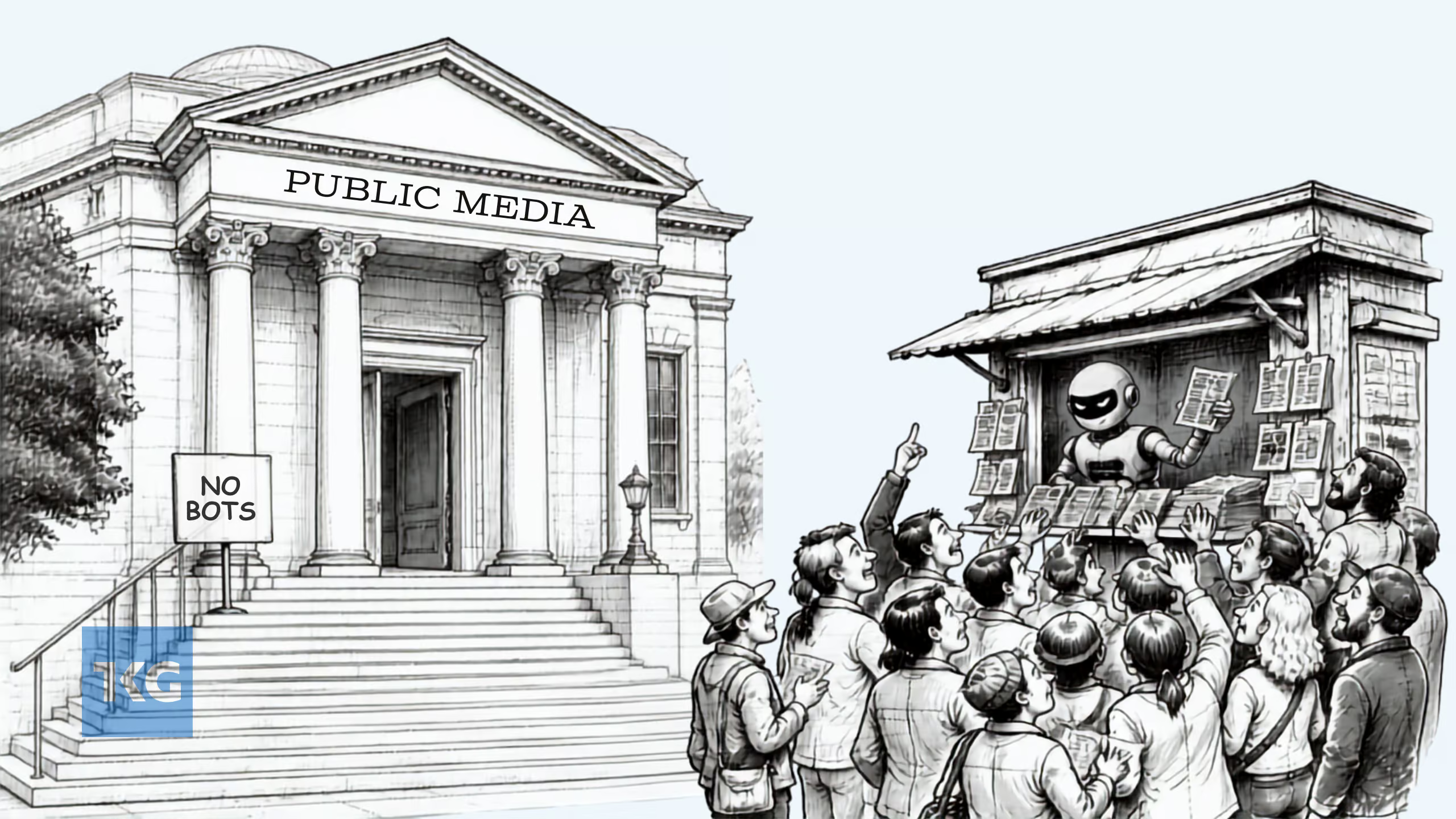
Our laws and institutions still treat mainstream media – the newspapers, radio and television media of the pre-digital age – differently, giving them special rights and privileges. They are granted exemption from some laws, special access to courts, to Parliament, and (not least!) are often given priority by communications professionals.
Does mainstream media deserve such differential treatment?
Consider this:
- Mainstream media have lost their monopoly on sourcing and publishing news and commentary. Today they’re competing (often poorly) with citizen reporters covering breaking news, bloggers and their communities of commenters for investigative journalism, and every person sharing news and views with each status update
- Mainstream media have lost their influence over public opinion. People are influenced more by what their social networks say about events and brands than what mainstream media and their advertisers say about them
- Mainstream media are no longer the cheapest and easiest channel for broadcasting public messages. Communications professionals can now communicate directly with their audiences using new media channels, more easily, cheaply and effectively than ever before
In fact, the term “mainstream media” is arguably a misnomer when social media is increasingly mainstream; “old media” is probably a better description.
If differential treatment of old and new media is an anachronism, what should replace it? Should a new regulatory regime be established that could apply to both old and new media alike, as proposed by the Law Commission? Or should the special privileges given to old media go altogether?
If we are all publishers now then perhaps we should all be given the same right to free speech? Subject of course to the same limitations – against defaming or breaching privacy, court orders and copyright – that already apply to everyone.
Isn’t anything else simply denying the reality that we are all publishers now?