I was reminded this week of this favorite expression of one of my mentors in corporate communications consultancy earlier in my career: “too low, too slow”.
An award-winning reporter, press-secretary to two prime ministers, and one of New Zealand’s leading issues management practitioners, “going in hard and fast” was her modus operandi for responding to a crisis. And she was exceptionally good at it.
The reminder was an article by Everything PR (“Why Speed Is No Longer the Crisis Communications Advantage”) doing the rounds this week. It argues that the rules of the game are changing and today responding first doesn’t guarantee a win, and that speed without strategy is now one of the surer ways to make a bad situation worse.
I half agree. They’re not wrong about the importance of strategy and getting your response right, but I don’t think this is anything new.
Content was always more important than speed
In the media management mindset of old our goal was getting first into the news cycle to dominate it and frame a story before someone else framed it for you. For a time, the rise of social media appeared to make a speedy response even more important. The deadline was no longer the news cycle but the feed itself, updating in real time.
But speed never really was more important than getting your response right, and I’ve come to appreciate the order of those words: “too low, too slow”. Yes, a timely response was important. But so was the nature and quality of the response.
A statement could be quick off the mark and still miss the mark, because it didn’t address the issue or, even worse, created a new one. Many reputational crises snowballed because the initial response was off the mark. That was as true in the days of “legacy media” as it is today.
Today’s misinformation is tomorrow’s established fact
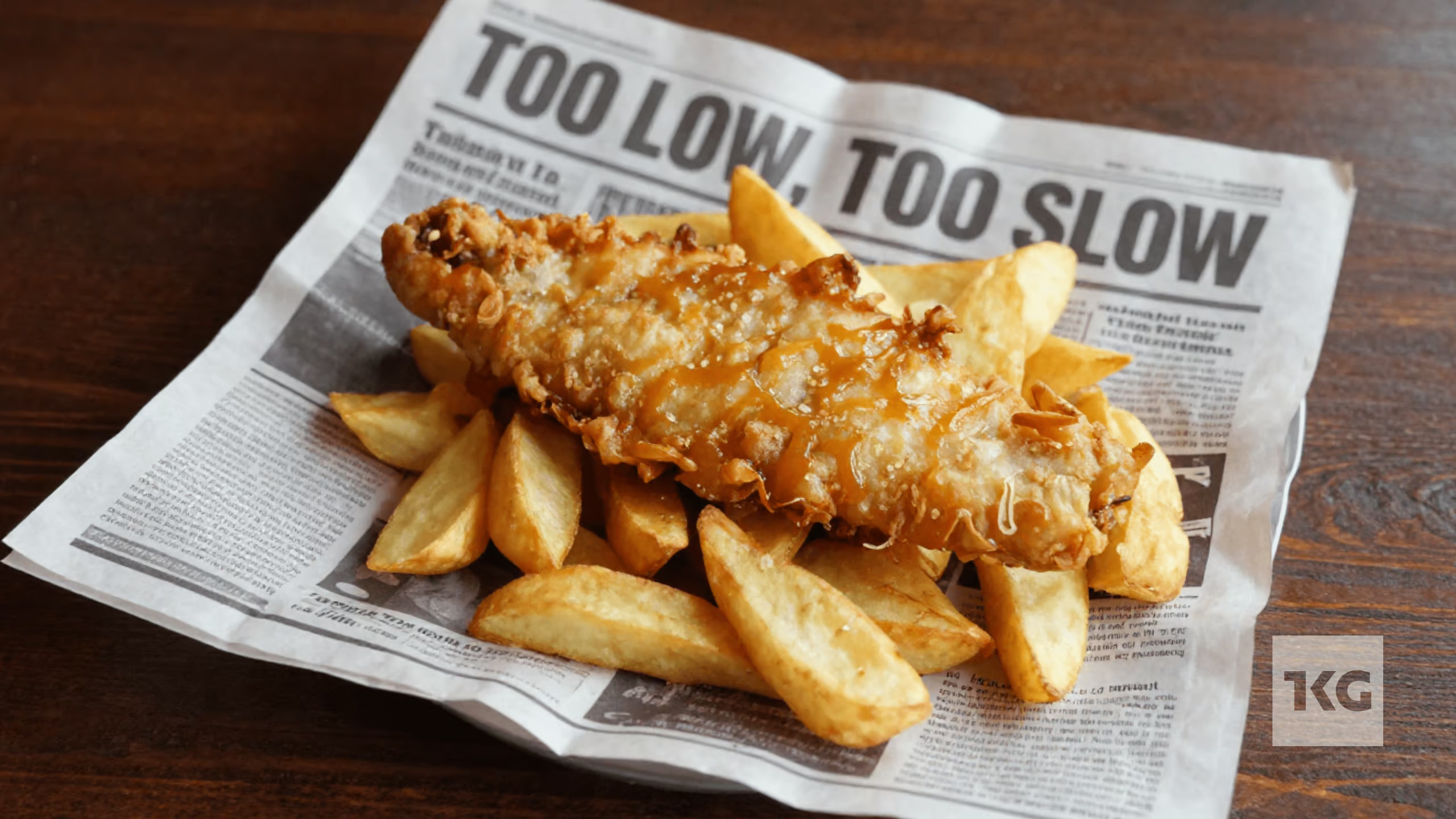
The article rightly points out the risks of weak holding statements of the “we are aware and looking into it” kind. They are less likely to reassure today’s cynical audiences, and have a permanence in today’s search and AI driven information-scape they didn’t have in the days when “today’s news is tomorrow’s fish and chips wrapper”.
But we would be wrong to conclude that “good things take time” and a delay is OK.
The vacuum the old hands warned about is still there, and it fills faster than ever. Today it’s often filling with content nobody in the room wrote. If you take too long to respond, a fabricated quote, deepfake video, or out-of-context clip might become your most-seen and remembered response.
Rather, we should conclude that we need to respond quickly, with an authentic and durable response.
“Too low, too slow” still holds. Speed alone was never the advantage; a robust timely response was. What made my mentor so good at issues management was that she acted quickly, decisively, and wisely.